
Planning & Layout · Complete guide
Vegetable Garden Planning and Layout: Beds, Spacing and Sun
By Furrow & Feast ·
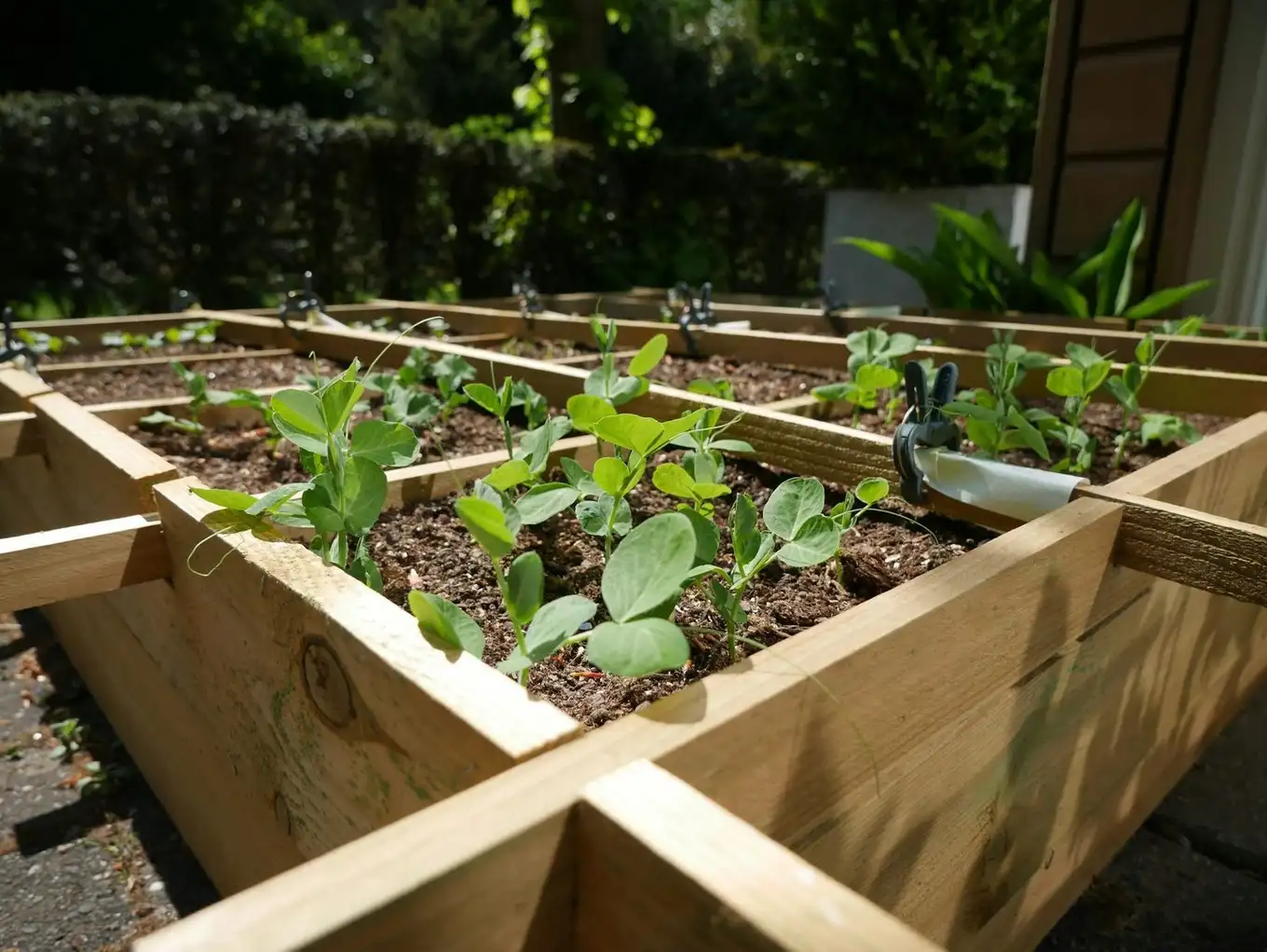
A garden plan is a map of three things: where the sun falls, how much room each crop needs, and when each bed will be busy. Get those right on paper in winter and planting day becomes simple.
Start with sun and water
Most fruiting vegetables, such as tomatoes, peppers, squash and beans, do best in full sun. Leafy greens and many herbs are more forgiving of partial shade. Before you choose a site:
- Map the sun. Note where shadows from buildings, fences and trees fall in the morning, at midday and in the late afternoon. Shadows are longer in spring and fall than in midsummer, so a spot that’s sunny in July may be shaded in April.
- Keep water close. A bed you can reach with a hose gets watered. A bed at the far end of the yard often doesn’t.
- Check drainage. Avoid low spots where water stands after rain.
Raised beds, in-ground rows or containers?
There is no single best method. Choose what fits your space, budget and body:
- In-ground beds or rows cost the least and suit larger plots.
- Raised beds warm up and drain faster in spring, keep paths and growing areas separate, and are easier on the back. Keep beds narrow enough that you can reach the middle from either side without stepping on the soil.
- Containers work on patios and balconies. Bigger containers dry out more slowly.
Prepare the soil
A soil test is the best way to know what your soil needs before adding lime or fertilizer; your state’s extension service can tell you how to get one. University of Minnesota Extension also cautions against working soil when it’s too wet: if soil sticks to your shovel or stays in a molded ball when squeezed, wait.
Space crops by their mature size
Crowded plants compete for light, water and nutrients, and poor airflow can encourage disease. Use the spacing on the seed packet or an extension planting guide, and plan for the plant’s size at maturity, not the size of the transplant.
- Tall crops (staked tomatoes, trellised beans and cucumbers, corn) go on the north side of the garden in the Northern Hemisphere so they don’t shade shorter crops.
- Sprawling crops like winter squash and melons need much more room than you expect, or a sturdy trellis.
- Quick crops like radishes and lettuce can fill gaps between slower crops early in the season.
Draw it out
Sketch your beds to scale on graph paper (or in a planner), one square per foot. Then pencil in:
- Each crop and how many plants or row-feet you’ll grow (see how much to plant).
- When each space will be planted and when it’ll be free again.
- What will follow it (see succession and companion planting).
Rotate crop families
Moving crop families to a different bed each year is a long-standing practice that can help reduce the buildup of some soil-borne pests and diseases. Group your crops by family, for example tomato family (tomatoes, peppers, eggplant, potatoes), cabbage family, squash family, legumes, and onion family, and shift each group to a new bed annually. Keep last year’s map so you know where everything was.
Keep records
Write down planting dates, varieties, and what thrived or failed. Next year’s plan starts with this year’s notes.
Next steps
- Get your planting window from the frost-date tool.
- Start transplants with the seed-starting guide.
Sources and further reading
Other guides
- Food Preservation for Homesteaders: Canning, Dehydrating, Fermenting and Root Cellaring
- Long-Term Food Storage: Building a Pantry You Actually Use
- How Much to Plant: Sizing Your Vegetable Garden to Your Household
- Hunting, Field Care and Home Processing of Game: A Practical Guide
- Off-Grid Growing: A Garden That Keeps Producing Without the Grid
- Seed Saving: Grow Your Own Seed Supply, Year After Year
- Seed Starting by Frost Date: The Complete Beginner's Guide
- Small Livestock for the Homestead: Chickens, Rabbits, Goats and Bees
- Succession and Companion Planting: Keep Beds Productive All Season
- Weather Prep for the Homestead: Frost, Freeze and Storm Readiness